Meta description: TikTok Shop's U.S. Black Friday campaign runs 20 days with three peaks inside it. As platform SLAs tighten and inbound windows close, fulfillment certainty becomes a measured result rather than a promise.
The 2026 U.S. Black Friday season did not open on Thanksgiving. It opened on November 12. TikTok Shop's U.S. campaign runs through December 1, with the Black Friday push, the Thanksgiving stretch and the Christmas gifting window following one another without a gap. Adobe expects U.S. online spending to reach $275.1 billion between November 1 and December 31, and the five days from Thanksgiving to Cyber Monday are forecast to account for 17.3% of it. For direct-to-consumer fulfillment, the pressure is not any single peak. It is that the pauses between peaks have disappeared.
The Peak Is No Longer a Weekend
Peak planning was built around a spike: a few days of elevated volume, a pause, then a smaller wave. The 2026 calendar removes the pause. Order intake runs for twenty days, with three separate surges inside it—the opening push from November 12, Black Friday on November 27, and Cyber Monday on November 30—and each one arrives before the previous one has fully cleared.
Adobe's numbers explain why the volume keeps coming. Cyber Monday alone is forecast at $15.1 billion, Black Friday at $12.9 billion, and Thanksgiving at $6.9 billion. Growth is coming from order value and conversion rather than from a larger crowd: online spending rises 6.7% year over year, while the share of shoppers who plan to buy online has fallen to 53%, the lowest since 2015.
Operationally, this changes the unit of planning. A warehouse sized for peak day will be wrong for eighteen of the twenty days; a warehouse sized for the average will fail on the three peaks. The workable model is rolling capacity—daily dispatch discipline, a defined backlog ceiling, and a clear answer to what gets deprioritized when the second wave lands before the first has cleared.
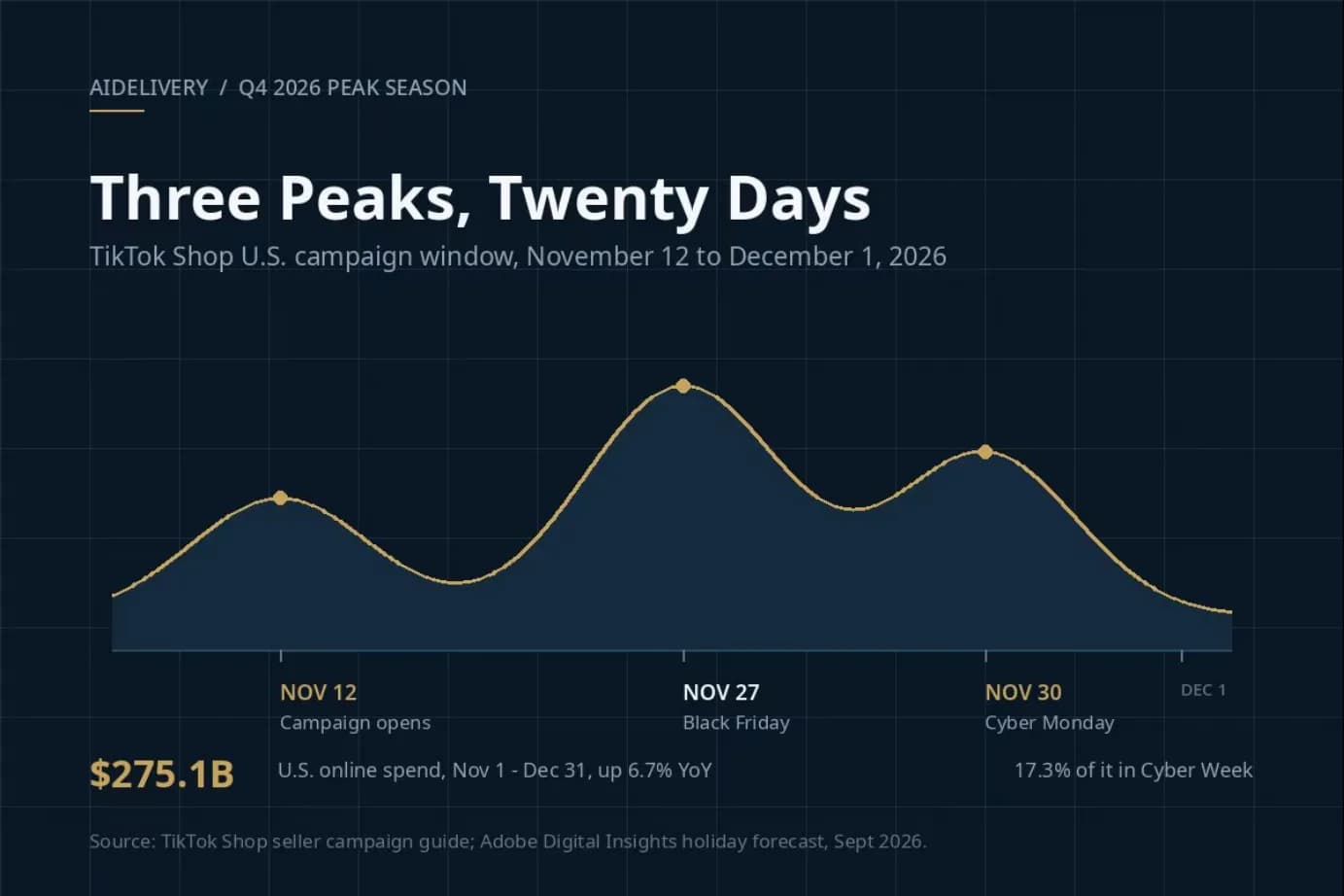
Figure 1 — Three peaks inside a twenty-day window. Source: TikTok Shop seller campaign guide; Adobe Digital Insights, September 2026.
What the Platform Actually Measures
TikTok Shop's U.S. fulfillment rules make the clock explicit. Regular orders must be dispatched within two business days of entering Awaiting Shipment, and the status must reach In Transit—which means a carrier scan, not a click in Seller Center. Delivery must follow within six business days.
Three metrics sit on top of that clock: valid tracking rate at or above 95%, late dispatch rate at or below 4% (above 10% triggers enforcement), and on-time delivery rate at or above 80%. FBT orders are excluded from the delivery metric; seller-fulfilled orders are not.
The practical consequence is that the clock starts at the carrier's first scan. Packing speed, label printing and the handoff to the pickup truck all fall inside the window the platform is scoring. A warehouse that ships on time but misses the last pickup of the day does not look on time to the platform.
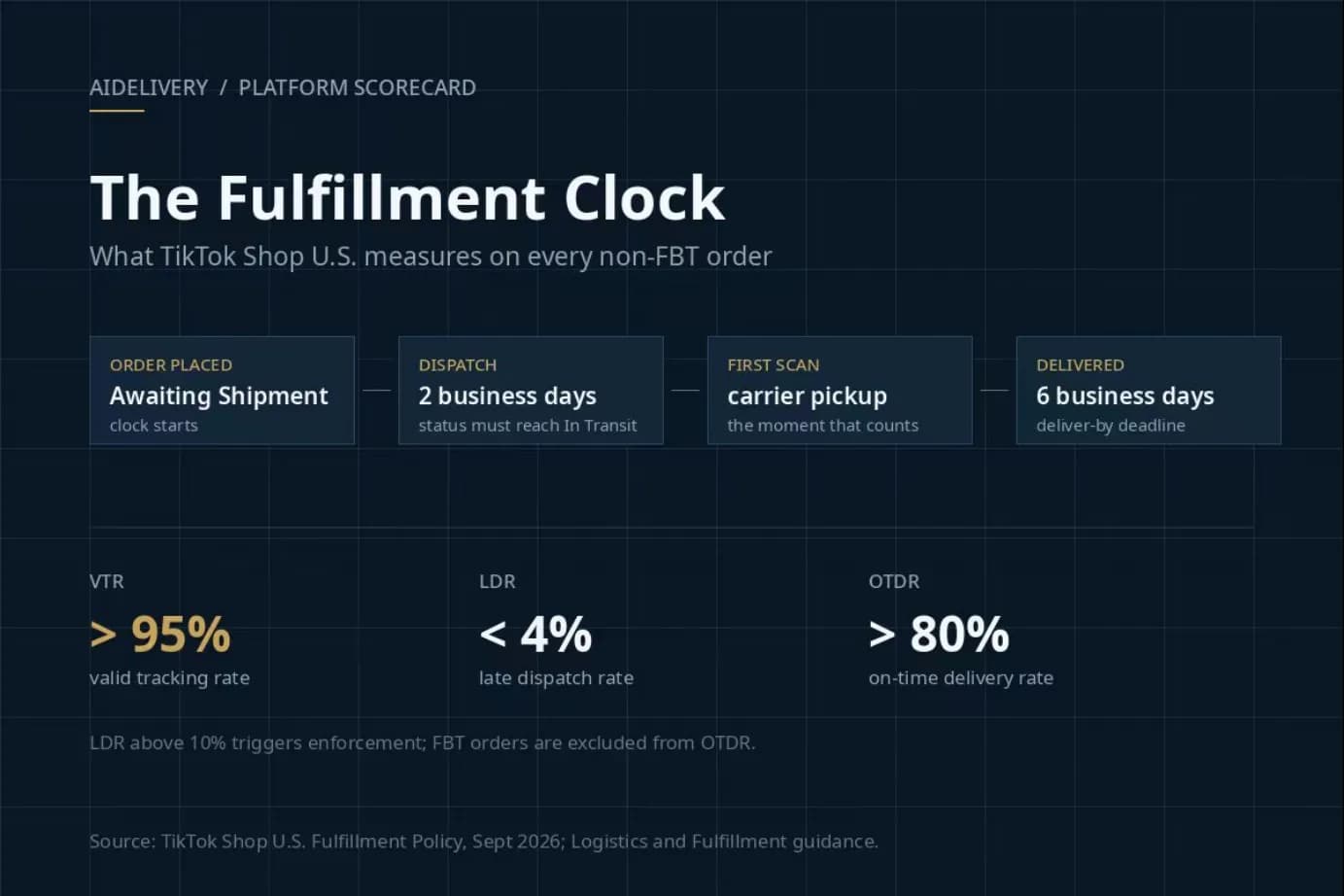
Figure 2—The fulfillment clock and the three metrics attached to it. Source: TikTok Shop U.S. Fulfillment Policy, September 2026.
The Inbound Window Is Closing
Replenishment is not a reliable lever in this calendar. For FBT, truck deliveries require an appointment booked at least four business days ahead, with cancellations at least 48 hours in advance; unbooked or mismatched inbound shipments can be rejected or flagged. In a normal week that is administrative. In the middle of a twenty-day campaign, it means the decision to restock has to be made before the first peak's results are known.
Upstream, the constraint is physical. On November 18, Los Angeles had 20,351 containers waiting for rail, 48% of them for nine days or longer; Long Beach had 21,400, with 17% past nine days. C.H. Robinson's November update attributes the backlog to insufficient rail cars rather than to ship arrivals, and reports that shippers moving time-critical cargo are turning to transloading and truck.
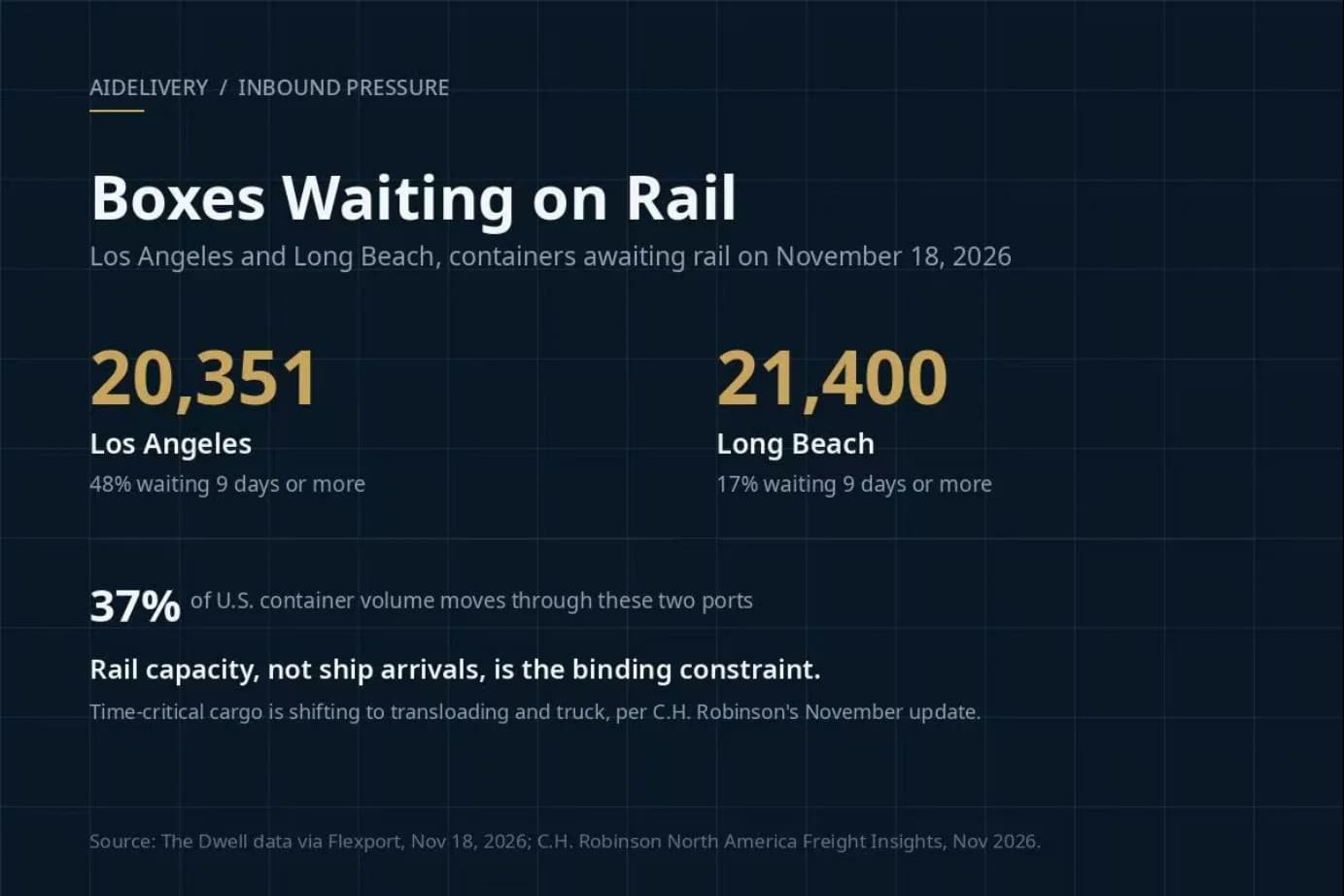
Figure 3—Containers awaiting rail at the two San Pedro Bay ports. Source: The Dwell data via Flexport, November 18, 2026; C.H. Robinson, November 2026.
Taken together, the inbound freeze and the rail backlog remove the option peak planning usually depends on: reacting mid-season. What sits in the warehouse on November 20 is roughly what is available for the rest of the campaign.
Certainty Has to Be Measured
Under these conditions, certainty is not a promise; it is a set of numbers a warehouse can report every day—dispatch completion before cut-off, 48-hour first-scan rate, and backlog days during peak. The operating rule is deliberately plain: clear orders daily, stay under a defined backlog ceiling, and do not stop the line.
One structural constraint deserves to be stated plainly. A single West Coast warehouse shipping to the East and South is four to five days by ground. No amount of in-warehouse speed removes that distance. It can only be managed before the order: move the cut-off earlier for cross-region orders, split last-mile by region instead of running one national lane, and lock cross-region inventory and capacity before the promotion rather than during it.
If those three are done, a single warehouse can still make a delivery promise it can keep. If they are not, no service-level commitment survives the second peak.
How AIDelivery Runs the Window
At AIDelivery, the U.S. direct-to-consumer business runs from a single core node in Los Angeles. Through the peak window, scheduling centers on three variables: the controllability of inbound appointments, which determines what can still be replenished once the FBT window tightens; dispatch completion before daily cut-off, which determines whether orders make the pickup truck; and a last-mile carrier mix split by region, which determines whether cross-region orders can be promised at a cost that still works.
The objective is modest and specific: turn on-time shipping from a sprint that happens once into a result that repeats in every order wave—including the wave that arrives while the previous one is still being cleared.
Sources: TikTok Shop U.S. Fulfillment Policy and Logistics & Fulfillment guidance (September 2026); TikTok Shop 2026 BFCM seller campaign guide; Adobe Digital Insights 2026 U.S. holiday forecast (September 2026); National Retail Federation holiday shopping trends (October 2026); C.H. Robinson North America Freight Insights (November 2026); The Dwell rail data via Flexport (November 18, 2026); FBT truck delivery appointment policy (October 2026). Verified November 23, 2026.